
Stay up to date
Subscribe to our newsletter
Subscribe to get your monthly news and updates directly from NEBOSH.
Subscribe to get your monthly news and updates directly from NEBOSH.
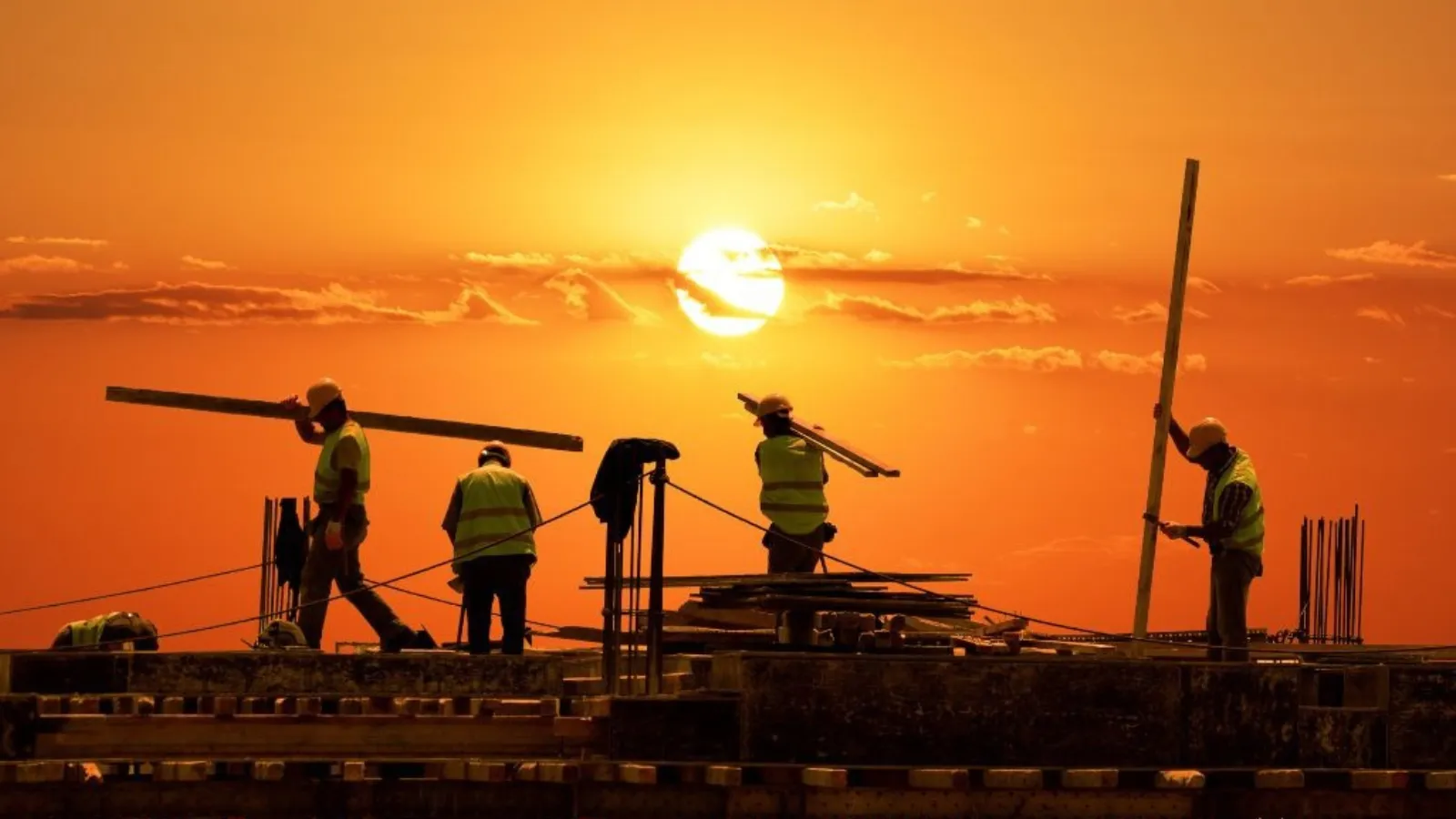
With longer, frequent and more intense heat waves, workforces are becoming more exposed to heat stress, but how does the profession manage one of the emerging occupational health risks?
By NEBOSH
25 August 2025
||This summer has already seen several heatwaves in the UK and Europe. In June, the temperature reached 46.6°C in the town of Mora, Portugal. Meanwhile, in the UK, the highest temperature of the year so far was recorded on 1 July, when 35.8 °C was measured in Faversham, Kent.
The Met Office's State of the UK Climate 2024 report, published just as the country and Europe experienced its third heatwave of the summer, concluded that "extreme weather is now the new normal." It says that extreme heat days are becoming more common, while days exceeding 8°C and 10°C above average have tripled and quadrupled, respectively. It means workplaces are getting warmer, and health and safety professionals are having to do more to protect workers against heat stress.
The sectors and areas of work most vulnerable include agriculture, mining, and construction. In the US, heat-related illness among construction workers is one of the leading causes of death.
On a global scale, the International Labour Organisation says that 2.4 billion workers are being exposed to excessive heat, resulting in, either directly or indirectly, more than 22 million non-fatal injuries annually.
Heat stress takes place when the body is unable to control its internal core temperature, leading to a spectrum of symptoms that range from fatigue, headaches and vomiting to potential seizures and a loss of consciousness. The process is affected by factors including air temperature, humidity, hydration levels, work rate and intensity, and work clothing, especially PPE.
From a global compliance perspective, and in the absence of strict legal limits, ISO Standards aligned with global heat analytical systems are useful markers of whether there is a heat stress problem. ISO 7243 assesses risk using the Wet Bulb Globe Temperature (an index that combines measurement of air temperature, humidity, radiant heat and wind speed) while ISO 7933 predicts the maximum time someone can be exposed to a hot environment (it introduces a Predicted Heat Strain (PHS) model that uses measurements of rectal temperature (i.e. core body temperature) and water loss as an indicator of thermal strain on the person).
EU Directives, including the Framework Directive 89/391/EEC and Council Directive 89/654/EEC, require employers to ensure worker safety under all foreseeable risks, including thermal risks. Each member state interprets and enforces this. In Spain, for example, while no fixed temperature limit applies, a Royal Decree ratified in May 2023 means work must be adapted or suspended if an official orange or red alert is announced or "if preventative measures do not sufficiently reduce risk."
In the UK, while there is no legal maximum working temperature, employers have duties under the Health and Safety at Work etc. Act 1974, to ensure risks around high temperatures are managed. The Management of Health and Safety at Work Regulations 1999 and Workplace (Health, Safety and Welfare) Regulations say employers need to assess risks (which includes heat stress) and implement appropriate control measures. In its guidance on temperature in the workplace, the Health and Safety Executive suggests a "thermal comfort" range between 13°C and 30°C, dependent on the type of work undertaken.
Doha Mattar is EHS Director at PepsiCo and oversees workforces in Africa, the Middle East and South Asia, where temperatures regularly hit above 40°C in the summer months. As such, in some countries, outdoor work is prohibited between the hours of 12 and 4 pm, when the sun is at its most intense. Speaking on a recent NEBOSH webinar, she said adhering to any regulation around heat "is essential and a basic fundamental … ensuring that if we have any legal or compliance obligations that we actually follow them".
She shared insights into how, alongside legislative alignment, the nature of the risk significantly relies on administrative controls (minimising risks through procedures, training, monitoring), which should be applied as opposed to an engineering control strategy (reducing or eliminating exposure to the hazard).
"One of the admin controls would be making sure that our employees are properly hydrated, and part of making them properly hydrated or encouraging them to do so is essentially providing the right facilities for them," she said.
Hydration and the correct delivery facilities are the cornerstone of heat stress management. Still, Doha also cited awareness of the risks as key and a proactive approach to spotting early warning signs such as dizziness, sweating, and confusion, which can be quite subtle.
"We do have sight of what could be going wrong and it actually looks very natural. People start getting lightheaded, they might feel nauseous, have a headache … in the workplace we need to make sure that we intentionally go and look for those early signs."
Technology and data analysis are also enabling employers to get visibility of extreme conditions that can form a predictive approach to heat stress management.
Data can be collected through wearable sensors, including arm bands, chest straps, and even stick-on patches. Software on a worker's smartphone can also provide input.
The goal is to record real-time core body temperature (the significant marker of heat stress) and combine this data with external environmental analytics such as the Wet Bulb Globe Temperature index or a PHS model. It enables establishing a safety point or cut-off so that measures can be applied more proactively, and, if possible changing the heat conditions to avoid the stress altogether.
To create that visibility, users can monitor data on a software platform or dashboard fed by input from the wearable monitors and global index readings. A combination of personal monitoring and environmental monitoring (like from weather forecasts) can help you build a predictive model and pre-empt issues before they arise. For example, a forecast of a high humidity figure can trigger a reassessment of risks and implementation of appropriate control measures before workers set out on that day. The system can also be supplemented further with data from permits and training documents. However, the technology can only thrive with management and workforce buy-in.
"Nothing happens without people," says David Picton at EcoOnline, "It's about the way you engage people and for them to see what's in it for them and what they can get out of the tech."
Having previously held Senior positions at Carillion, Sky, Lenova and National Highways (where he was Interim Executive Director in 2018), he says technology can only operate in a strong safety culture where there is workforce buy-in.
"Of course, people have concerns over data, over biometric data. If you're starting to ask them to wear a device, there are privacy concerns or perhaps a perspective that they're being monitored or checked in on. So, before you even consider rolling out this kind of technology, you need to work with the workforce to explain your goal. But as you go through the process, you can show people the benefits, such as seeing the early warning signs."
He suggests that insights from a trial group can help change attitudes once shared with the wider workforce. For example, before the technology, a worker may have continued working when the now-established safety cut-off point was indicated. "You can get that kind of an early win that helps the rest of the workforce to see it in the context of what it can do for them."
NEBOSH
With longer, frequent and more intense heat waves, workforces are becoming more exposed to heat stress, but how does the profession manage one of the emerging occupational health risks?
By NEBOSH
|25 August 2025
|This summer has already seen several heatwaves in the UK and Europe. In June, the temperature reached 46.6°C in the town of Mora, Portugal. Meanwhile, in the UK, the highest temperature of the year so far was recorded on 1 July, when 35.8 °C was measured in Faversham, Kent.
The Met Office's State of the UK Climate 2024 report, published just as the country and Europe experienced its third heatwave of the summer, concluded that "extreme weather is now the new normal." It says that extreme heat days are becoming more common, while days exceeding 8°C and 10°C above average have tripled and quadrupled, respectively. It means workplaces are getting warmer, and health and safety professionals are having to do more to protect workers against heat stress.
The sectors and areas of work most vulnerable include agriculture, mining, and construction. In the US, heat-related illness among construction workers is one of the leading causes of death.
On a global scale, the International Labour Organisation says that 2.4 billion workers are being exposed to excessive heat, resulting in, either directly or indirectly, more than 22 million non-fatal injuries annually.
Heat stress takes place when the body is unable to control its internal core temperature, leading to a spectrum of symptoms that range from fatigue, headaches and vomiting to potential seizures and a loss of consciousness. The process is affected by factors including air temperature, humidity, hydration levels, work rate and intensity, and work clothing, especially PPE.
From a global compliance perspective, and in the absence of strict legal limits, ISO Standards aligned with global heat analytical systems are useful markers of whether there is a heat stress problem. ISO 7243 assesses risk using the Wet Bulb Globe Temperature (an index that combines measurement of air temperature, humidity, radiant heat and wind speed) while ISO 7933 predicts the maximum time someone can be exposed to a hot environment (it introduces a Predicted Heat Strain (PHS) model that uses measurements of rectal temperature (i.e. core body temperature) and water loss as an indicator of thermal strain on the person).
EU Directives, including the Framework Directive 89/391/EEC and Council Directive 89/654/EEC, require employers to ensure worker safety under all foreseeable risks, including thermal risks. Each member state interprets and enforces this. In Spain, for example, while no fixed temperature limit applies, a Royal Decree ratified in May 2023 means work must be adapted or suspended if an official orange or red alert is announced or "if preventative measures do not sufficiently reduce risk."
In the UK, while there is no legal maximum working temperature, employers have duties under the Health and Safety at Work etc. Act 1974, to ensure risks around high temperatures are managed. The Management of Health and Safety at Work Regulations 1999 and Workplace (Health, Safety and Welfare) Regulations say employers need to assess risks (which includes heat stress) and implement appropriate control measures. In its guidance on temperature in the workplace, the Health and Safety Executive suggests a "thermal comfort" range between 13°C and 30°C, dependent on the type of work undertaken.
Doha Mattar is EHS Director at PepsiCo and oversees workforces in Africa, the Middle East and South Asia, where temperatures regularly hit above 40°C in the summer months. As such, in some countries, outdoor work is prohibited between the hours of 12 and 4 pm, when the sun is at its most intense. Speaking on a recent NEBOSH webinar, she said adhering to any regulation around heat "is essential and a basic fundamental … ensuring that if we have any legal or compliance obligations that we actually follow them".
She shared insights into how, alongside legislative alignment, the nature of the risk significantly relies on administrative controls (minimising risks through procedures, training, monitoring), which should be applied as opposed to an engineering control strategy (reducing or eliminating exposure to the hazard).
"One of the admin controls would be making sure that our employees are properly hydrated, and part of making them properly hydrated or encouraging them to do so is essentially providing the right facilities for them," she said.
Hydration and the correct delivery facilities are the cornerstone of heat stress management. Still, Doha also cited awareness of the risks as key and a proactive approach to spotting early warning signs such as dizziness, sweating, and confusion, which can be quite subtle.
"We do have sight of what could be going wrong and it actually looks very natural. People start getting lightheaded, they might feel nauseous, have a headache … in the workplace we need to make sure that we intentionally go and look for those early signs."
Technology and data analysis are also enabling employers to get visibility of extreme conditions that can form a predictive approach to heat stress management.
Data can be collected through wearable sensors, including arm bands, chest straps, and even stick-on patches. Software on a worker's smartphone can also provide input.
The goal is to record real-time core body temperature (the significant marker of heat stress) and combine this data with external environmental analytics such as the Wet Bulb Globe Temperature index or a PHS model. It enables establishing a safety point or cut-off so that measures can be applied more proactively, and, if possible changing the heat conditions to avoid the stress altogether.
To create that visibility, users can monitor data on a software platform or dashboard fed by input from the wearable monitors and global index readings. A combination of personal monitoring and environmental monitoring (like from weather forecasts) can help you build a predictive model and pre-empt issues before they arise. For example, a forecast of a high humidity figure can trigger a reassessment of risks and implementation of appropriate control measures before workers set out on that day. The system can also be supplemented further with data from permits and training documents. However, the technology can only thrive with management and workforce buy-in.
"Nothing happens without people," says David Picton at EcoOnline, "It's about the way you engage people and for them to see what's in it for them and what they can get out of the tech."
Having previously held Senior positions at Carillion, Sky, Lenova and National Highways (where he was Interim Executive Director in 2018), he says technology can only operate in a strong safety culture where there is workforce buy-in.
"Of course, people have concerns over data, over biometric data. If you're starting to ask them to wear a device, there are privacy concerns or perhaps a perspective that they're being monitored or checked in on. So, before you even consider rolling out this kind of technology, you need to work with the workforce to explain your goal. But as you go through the process, you can show people the benefits, such as seeing the early warning signs."
He suggests that insights from a trial group can help change attitudes once shared with the wider workforce. For example, before the technology, a worker may have continued working when the now-established safety cut-off point was indicated. "You can get that kind of an early win that helps the rest of the workforce to see it in the context of what it can do for them."
NEBOSH
